



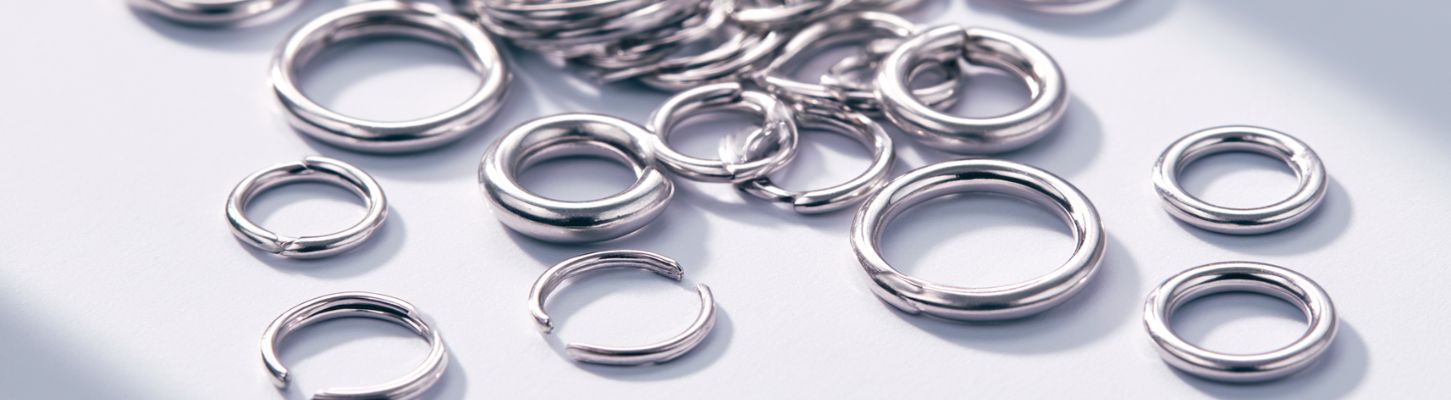
Two tiny rings. One big difference. If you've ever had a charm vanish off a bracelet or fought to pry open a stubborn loop, you've already met the quiet rivalry in the jump ring vs split ring debate.
The core difference is simple: a jump ring is a single loop of wire with two ends that meet, while a split ring is a double coil of wire, like a tiny key ring. Jump rings open and close in seconds, making them the go-to for most jewelry connections. Split rings hold far more securely because they have no open seam, but they require a little more effort in return.
In this guide, we'll break down what each ring is, how they're built, and the key differences that set them apart. We'll also cover when to reach for one over the other and how to pick the right size and gauge so every connection sits clean and stays strong. Let's dive deeper into the details.
Explore Our Categories


What Is a Jump Ring?
Picture a tiny circle of wire bent into a closed loop. That's the heart of a jump ring. Where the wire's tips come together, they form a tiny gap you work apart and press shut using a pair of pliers. That simple open-and-shut design is exactly why crafters reach for them more than any other linking piece. You use them to attach clasps, link charms, hang pendants, and join chains.
The trade-off is the seam. If a jump ring is not closed tightly or if the wire gauge is too thin, the ends can pull apart under weight. Closing it flush and choosing a sturdy gauge solves this for most designs.
What Is a Split Ring?
A split ring is made from wire wrapped around itself twice, forming a continuous double loop. Think of a miniature key ring. To use one, you spread the coils apart with your nail or a split ring tool and slide your component onto the ring.
Because there is no single open seam, a charm or clasp cannot simply slip out. This makes split rings popular for pieces that take daily wear, like charm bracelets, and for non-jewelry items such as key chains and zipper pulls.
Jump Ring vs Split Ring: Key Differences
Here is a quick side-by-side look at split ring vs jump ring features:
|
Feature |
Jump Ring |
Split Ring |
|
Structure |
Single loop, one seam |
Double coil, no seam |
|
Security |
Good when closed flush |
Very secure, no open gap |
|
Ease of use |
Fast, open with pliers |
Slower, needs a tool or nail |
|
Best for |
Clasps, chain, charms, earrings |
High-wear pieces, key chains |
|
Look |
Slim and low-profile |
Slightly bulkier |
The split rings vs jump rings choice usually comes down to a balance of speed and security.
When to Use Each
Reach for a jump ring when you want speed and a clean, low-profile connection. They are ideal for earrings, simple chain assembly, and most everyday designs. Closed jump rings, which have no open seam, give you extra peace of mind for clasps and weight-bearing links.
Choose a split ring when a connection must stay closed under heavy or constant use. A charm that you never want to lose is a great candidate. Plenty of crafters stock a range of sizes and simply grab whichever one suits the piece they're assembling.
Choosing between jump rings and split rings isn't a question of which one wins. It's about fit for the task.
How to Choose the Right Size and Gauge
Two numbers matter most: diameter and gauge. Diameter is the size of the loop, and gauge is the thickness of the wire. A thicker, lower-gauge wire makes a stronger ring. For pieces that carry weight, a heavier gauge resists bending and spreading. For delicate work, a thinner gauge keeps the look refined.
When you shop, match your ring size to your clasp, chain, or charm so everything sits neatly together.
Shop Jump Rings and Split Rings at Atlanta Findings Company
At Atlanta Findings Company, we supply premium jewelry findings and components trusted by professional designers and artisans across the U.S. You can explore our jump rings collection for durable connectors in a range of sizes, styles, and finishes for secure, reliable connections in your jewelry making.
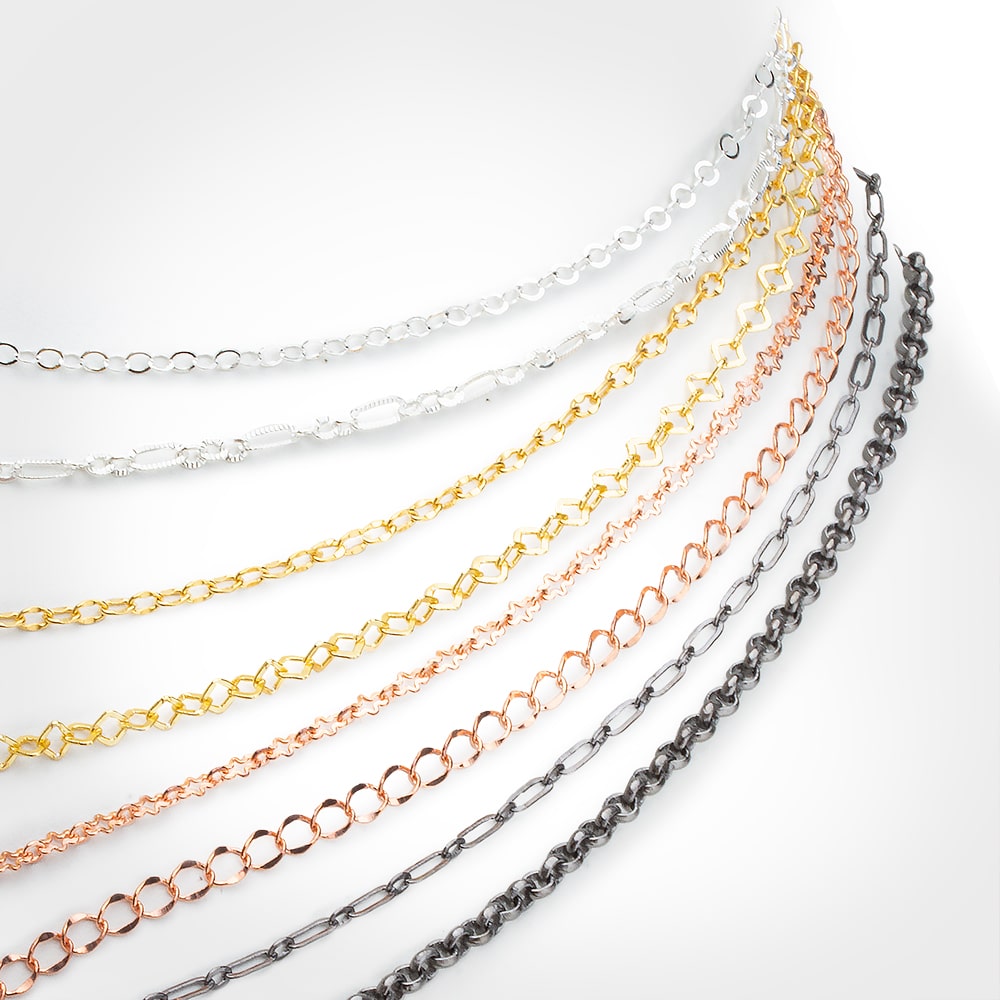
We also carry clasps, earwires, headpins, charms, spacers, and metal chains to complete your design. Orders over $100 ship for free.
Conclusion
When it comes to jump ring vs split ring, there is no single winner. Every type pulls its own weight in your kit. Jump rings give you speed and a clean, low-profile link for everyday designs, while split rings give you extra security for pieces that take heavy or daily wear. The right choice depends on your project, the weight it needs to hold, and how often the piece will be worn.
A good rule of thumb: reach for jump rings for most connections, and switch to split rings when losing a charm or clasp is not an option. Stock an assortment of sizes and wire gauges, and you'll never be caught without the connector a project calls for.
Have questions? Reach our specialists at info@Atlantabeadcompany.com or by phone at +1 888-234-1234, and browse our blog for more detailed information about findings.


