When sourcing or designing jewelry, even the smallest components carry real weight. If you have been comparing lobster clasp vs spring clasp and trying to figure out which one is right for your pieces, you are in exactly the right place. These two clasps dominate the market for necklaces, bracelets, and anklets, yet they work differently, perform differently under wear, and suit very different design requirements. Getting the choice wrong can mean lost pieces, frustrated customers, and a reputation for poor-quality findings.
At Atlanta Findings Company, we supply Lobster clasps across a full range of metals, sizes, and finishes. We put this guide together to give you a clear, expert-level comparison so you can make the most confident buying and design decision possible.
Table of contents
Explore Our Categories


What Is a Lobster Clasp?
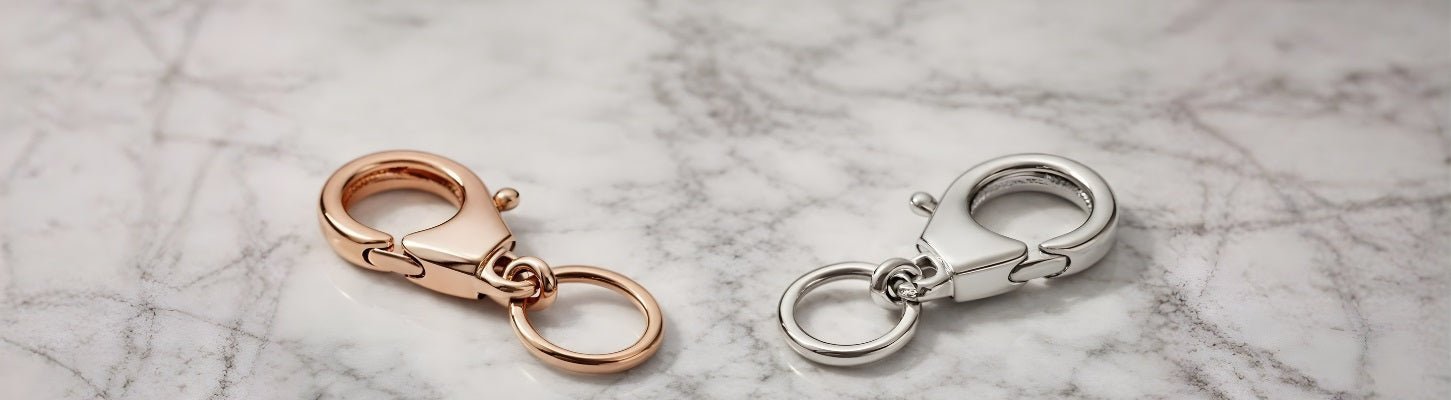
A lobster clasp, also called a lobster claw clasp, gets its name from its shape. Look at a lobster's pincer, and you will instantly recognize the same profile. The clasp features an elongated, pear or oval-shaped body with a spring-loaded lever on one side. Pressing the lever pulls back a small hinged arm, opening the claw so it can hook onto a jump ring or chain link. Once the lever is released, the spring-driven mechanism securely closes the claw.
The widespread use of lobster clasps in modern jewelry production is due to their proven effectiveness. They offer a secure closure, they are easy to operate with one hand, and they come in a range of sizes, finishes, and styles, including standard oval, pear-shaped, round, heart-shaped, swivel, and trigger varieties. The body contains more metal than a spring ring of comparable size, which is what gives the lobster clasp its well-earned reputation for durability. Standard sizes range from 8mm to 25mm in length, with 12mm to 18mm being most popular for everyday necklaces and bracelets.
Common Applications for Lobster Clasps
- Medium to heavy chain necklaces (curb, figaro, rope, Havana links)
- Statement and layered bracelets
- Tennis bracelets and diamond chains
- Pendant necklaces carrying heavier pendants
- Fashion and fine jewelry designed for daily wear
- Men's jewelry, including chunky chains 3mm and above
What Is a Spring Clasp?
Known as a spring ring clasp, this is a small circular metal ring with a spring tab on one side for operation. Pressing or pulling the tab compresses the internal spring and retracts a small bar segment, opening a gap in the ring. Hook the gap onto a jump ring or loop, release the tab, and the spring returns the bar to its closed position, securing the connection.
The spring ring clasp has been a key component in jewelry design since the early 1900s. They are lightweight, low-profile, and cost-effective, which is why you will find them on everything from fine pearl necklaces to fashion anklets. Because the body is a thin, hollow tube rather than a solid metal form, spring clasps weigh considerably less than lobster clasps of a similar diameter. That lightweight quality is one of their most valued traits for delicate jewelry designs. Sizes typically range from 5mm to 16mm, with 6mm to 10mm being most common for fine jewelry. Note that very large spring rings (18mm and up) are sometimes called bolt rings.
Common Applications for Spring Ring Clasps
- Fine, thin-chain necklaces (box chains, snake chains, cable chains under 1.2mm)
- Pearl and bead strand necklaces
- Delicate anklets and lightweight bracelets
- Choker necklaces where a discreet finish matters
- Removable charms that snap on and off with ease
- Budget-conscious fashion jewelry lines where cost-per-unit is a primary driver
Lobster Clasp vs Spring Clasp: A Detailed Side-by-Side Comparison
The table below gives you a complete at-a-glance breakdown. When evaluating lobster clasp vs spring clasp for any specific design, run your requirements against these 11 factors before making a final decision.
|
Factor |
Lobster Clasp |
Spring Ring Clasp |
|---|---|---|
|
Shape |
Elongated claw/pear / oval body |
Circular hollow metal ring |
|
Mechanism |
Spring-loaded hinged lever on the side |
Spring-loaded retractable tab inside ring |
|
Weight |
Heavier — solid metal body |
Lightweight — hollow construction |
|
Security |
High — spring resists accidental opening |
Moderate — spring weakens over time |
|
Ease of Use |
High — wide lever, operable one-handed |
Low to moderate — small tab, needs grip |
|
Best For |
Heavy, daily-wear, and valuable pieces |
Lightweight, delicate, occasional-wear pieces |
|
Cost |
Higher — more metal content |
Lower — mass-produced, minimal material |
|
Aesthetic |
Slightly bulkier; visible on thin chains |
Minimal profile; blends with fine chains |
|
Longevity |
Longer lifespan with quality metal |
Spring wears faster under daily stress |
|
Dexterity Needed |
Lower — larger lever is easy to press |
Higher — small tab requires fine motor control |
|
Chain Migration |
Heavier; can drift toward the front on thin chains |
Light stays in place more reliably |
Security and Strength: spring ring vs lobster clasp
Security is often the deciding factor for buyers comparing spring ring vs lobster clasp options. The lobster claw clasp wins this category consistently. Its spring mechanism sits inside a solid, heavier body, and the hinged lever snaps firmly into place when released. This design makes accidental opening very unlikely, even with heavier jewelry moving against clothing, skin, or other surfaces throughout the day.
The spring ring clasp relies on a small internal spring within a hollow metal tube. While perfectly adequate for lightweight pieces, that spring is the clasp's weakest point. Repeated compression over months or years gradually weakens it. Once the spring loses tension, the bar no longer snaps shut fully, leaving a gap that can allow necklaces and bracelets to slip free. For any piece worn every day, or any item of significant monetary or sentimental value, a lobster clasp is the more reliable long-term investment.
Metal quality plays just as important a role as the clasp type when considering durability. A well-made sterling silver or gold-filled lobster clasp will far outlast a cheaply plated base-metal version, regardless of its design. At Atlanta Findings Company, we stock clasps across multiple metal types so you can match both durability and design to your exact requirements.
Ease of Use: spring clasp vs lobster clasp for Everyday Wearers
When evaluating spring clasp vs lobster clasp from the end-wearer's perspective, ease of use is a practical and often overlooked consideration. Lobster clasps, particularly in medium and large sizes, are significantly easier to operate. The lever is wide enough to press with a fingertip or thumbnail, and the motion is intuitive. Many people can fasten a lobster clasp bracelet with one hand, which is a real advantage for daily wearers.
Spring ring clasps present a different experience. The tab is small and flush with the ring's profile, requiring precise fingertip control. For anyone with long nails, arthritis, limited hand mobility, or reduced dexterity, a spring ring can become genuinely frustrating. Jewelers regularly see customers requesting clasp upgrades specifically because their spring rings are too difficult to manage solo. If your target customer wears jewelry every day or has any dexterity limitations, defaulting to a lobster clasp is the more customer-friendly decision.
One important caveat: very small lobster clasps can also be difficult for people with dexterity challenges. If accessibility is a priority, select a lobster clasp in a medium or larger size to maximize the ease-of-use benefit.
Aesthetic Considerations: Profile and Visibility
Beyond mechanics, the visual impact of a clasp matters for the overall design of a piece. This is where the spring ring holds a clear advantage. Its circular, low-profile form blends almost invisibly into thin chains and delicate strands. For fine jewelry where the clasp should be neither seen nor noticed, the spring ring is the classic choice.
The lobster clasp, because of its elongated body and larger lever, is more noticeable on the neck or wrist. On a delicate 1mm chain, a standard lobster clasp can look visually heavy and out of proportion. There is also a tendency for a heavier lobster clasp to migrate toward the front of a necklace over time, which is a nuisance for wearers. On heavier chains, statement pieces, and bracelets, the clasp's size is proportional and appropriate, and migration is far less of a problem.
For designers who want the security of a lobster clasp without the visual bulk, a smaller oval or mini lobster clasp paired with the right chain width often works well. Swivel lobster clasps are also a popular solution for necklaces because they rotate freely, reducing the chance of the clasp traveling to the front.
Cost Differences: Pricing in Wholesale Jewelry Findings
Cost is a real factor in any production decision. Spring ring clasps are among the least expensive jewelry findings available. Because they are hollow and use minimal metal, they can be manufactured very affordably. Sterling silver spring rings retail for just a few dollars per unit, with wholesale prices considerably lower. This is why most mass-market necklaces priced under $100 come standard with a spring ring.
Lobster clasps cost more because of their solid body and higher metal content. A 14K gold lobster clasp is noticeably more expensive than a spring ring of comparable karatage and size. For base metal or brass production pieces, the per-unit price difference is modest. However, across fine metal production at volume in sterling silver, gold-filled, or solid gold, the savings from spring rings can add up quickly.
That said, the cost of a clasp failure, including customer complaints, returns, and lost trust, far outweighs the per-unit savings from using a spring ring on a piece that calls for more security. Choosing the appropriate clasp is a more cost-effective decision in the long run.
Lobster Clasp vs Spring Ring: Which Is Better for Necklaces?
For necklaces, the best answer depends on chain weight and style. Below is a practical guide based on chain width:
- Delicate chains (0.8mm to 1.2mm): Spring ring clasps are the traditional and visually appropriate choice. Box chains, snake chains, and thin cable chains pair naturally with spring rings, keeping the clasp proportional and invisible.
- Medium chains (1.4mm to 2.5mm): Either clasp works, though a small to medium oval or pear-shaped lobster clasp is increasingly preferred for better security without sacrificing appearance.
- Heavy chains (3mm and above): Lobster clasps are strongly recommended. Curb, figaro, rope, and Havana-link chains carry significant weight, and a spring ring's spring mechanism is not built for that kind of sustained load. A robust lobster clasp with a swivel feature is the industry standard for men's chains and bold statement necklaces.
A useful rule of thumb: if the chain itself is worth protecting, upgrade to a lobster clasp regardless of weight. The per-unit cost difference is minimal compared to the cost of losing the chain.
Spring Ring Clasp vs Lobster Clasp: Which Is Better for Bracelets?
Bracelets present a different challenge than necklaces. They experience more movement, more frequent fastening and unfastening, and often need to be put on with just one hand. For these reasons, spring ring clasp vs lobster clasp comparisons lean even more decisively toward the lobster clasp when bracelets are the focus.
Trying to fasten a spring ring bracelet solo is a well-known frustration. The small tab, the need to thread a jump ring while holding the bracelet in place, and the lack of grip surface all combine to make single-handed operation nearly impossible for most people. The lobster clasp, with its wider lever, is far more manageable when fastening a bracelet on your own.
Lightweight bead bracelets and single-strand lightweight bangles are reasonable exceptions where a spring ring can perform adequately. However, for chain bracelets, tennis bracelets, and any piece a customer will wear and remove daily, a lobster clasp is the stronger, more practical recommendation.
Materials and Metal Options for Both Clasps
Both lobster and spring ring clasps are available in a wide range of metals and finishes. Matching the clasp metal to both the aesthetic and the functional demands of your design is a critical step in any production workflow.
Common Metal Options
- Sterling Silver (925) is known for its brightness, durability, and resistance to tarnish when maintained properly. Available in both clasp types across the full size range.
- Gold-filled clasps offer the look of solid gold but at a more affordable price. Ideal for spring rings on fine chains and lobster clasps on mid-weight pieces.
- 14K and 18K Solid Gold: The premium option for fine jewelry. Lobster clasps are more common than spring rings in solid gold due to the higher security expectations of gold jewelry buyers.
- Brass with Plating: Cost-effective for fashion jewelry lines. These clasps are offered in various finishes, including gold, silver, rose gold, gunmetal, and antique.
- Stainless Steel: Highly durable and corrosion-resistant. Popular for contemporary designs and waterproof jewelry lines.
- Copper: Warm tone, affordable, and widely used in artisan and handmade jewelry. Pairs well with natural materials.
Atlanta Findings Company carries clasps across all of these metal categories in lobster styles, giving you the flexibility to source everything you need in one place.
How to Maintain Your Clasps for a Longer Lifespan
Both lobster and spring clasps require basic care to stay reliable over time. The spring mechanism inside both clasp types is the most vulnerable component, and a few simple habits can significantly extend its life.
- Inspect regularly: Each time you put on or remove a piece, check that the clasp snaps shut firmly with no play, wobble, or resistance.
- For cleaning, use a soft cloth or a brush with mild soapy water to wipe away oils, lotions, and other residues.
- Lubricate occasionally: A tiny drop of sewing machine oil or jewelry-specific lubricant applied to the spring mechanism restores smooth operation and helps prevent seizing.
- Avoid prolonged moisture exposure: Water, chlorine, and saltwater all accelerate spring fatigue and metal corrosion, especially in plated clasps.
- Store carefully: Keep jewelry clasped and closed when stored to reduce stress on the spring mechanism between wears.
Lobster Clasp vs Spring Ring: Quick Decision Guide
When deciding between clasp types for a jewelry project, follow this useful framework:
- Choose a lobster clasp when the piece is worn daily, weighs more than 5 grams, requires one-handed fastening, or holds significant monetary or sentimental value. In the lobster clasp vs spring ring decision, security and usability tip the scales toward the lobster for anything beyond casual, occasional wear.
- Choose a spring ring clasp when the piece is lightweight and delicate, visual minimalism is a design priority, the piece is worn occasionally, or per-unit cost is a primary driver.
- Consider the wearer: Anyone with arthritis, limited dexterity, or reduced hand mobility is better served by a lobster clasp in a medium or larger size.
- Match proportions: A clasp that is visually too large or too small for the chain will look off. Always check the clasp-to-chain-width ratio before finalizing your design.
- Prioritize metal quality: A well-made clasp in any style outperforms a cheap version of the supposedly stronger type. Match the metal type and finish to the rest of the piece.
Choosing the Right Clasp for Your Jewelry Line
The spring ring vs lobster clasp question does not have a single universal answer, but the right choice becomes clear once you weigh your specific design requirements against how the piece will actually be worn. For the majority of jewelry sold and worn today, the lobster clasp delivers a better combination of security, usability, and longevity. The spring ring remains a trusted option for lightweight, delicate pieces where a subtle profile and lower cost take priority.
Whether you are restocking your findings inventory or designing a new line from scratch, Atlanta Findings Company carries clasp types across a full range of metals, sizes, and finishes. Browse our Lobster clasp collections today or reach out to our team for expert guidance on the right findings for your specific design needs.
If you're curious more about lobster clasp vs spring clasp, feel free to give us a call at +1 888-234-1234 or send us an email at info@atlantafindingscompany.com. Our experts are happy to assist you! Visit our blog for more details on jewelry clasps, and feel free to reach out.
Frequently Asked Questions
Is a Lobster Clasp Stronger Than a Spring Ring?
Yes. Typically, a lobster clasp provides better security and strength than a spring ring clasp. Its solid body and robust lever mechanism provide better resistance to accidental opening and a longer-lasting performance under daily wear. For pieces that are worn regularly or carry significant value, a lobster clasp is the safer choice.
What is the Most Secure Jewelry Clasp Overall?
Box clasps and barrel clasps are often cited as the most secure of all clasp types due to their multi-part locking mechanisms and tab-and-tongue designs. However, for the vast majority of everyday jewelry applications, a quality lobster clasp provides excellent security at a fraction of the cost and without the added complexity.
Can I Replace a Spring Ring With a Lobster Clasp?
Indeed, upgrading from a spring ring to a lobster clasp is a standard procedure for jewelers. The jeweler removes the spring ring and attaches a lobster clasp of an appropriate size to the jump ring at the end of the chain, either by soldering or by opening and closing a jump ring connection. If you prefer a no-solder approach, a lobster clasp with an open jump ring can sometimes be swapped without any tools.
Why Does My Necklace Clasp Keep Moving to the Front?
A heavier lobster clasp on a thin, lightweight chain will naturally slide forward because gravity pulls the heaviest point downward. The most effective solution is to use a swivel lobster clasp, which rotates freely and reduces migration. Alternatively, switch to a spring ring if the chain is fine enough, or use a safety extender chain with a counterweight to keep the clasp positioned at the back of the neck.
What Sizes Do Lobster Clasps and Spring Rings Come in?
Spring rings typically range from 5mm to 22mm in diameter, with 6mm to 10mm being the most common for fine jewelry. Lobster clasps range from 8mm to 25mm in length, with 12mm to 18mm being the most popular sizes for everyday necklaces and bracelets. At Atlanta Findings Company, we carry clasps across the full range in multiple metals so you can match the right size and finish to any design.