



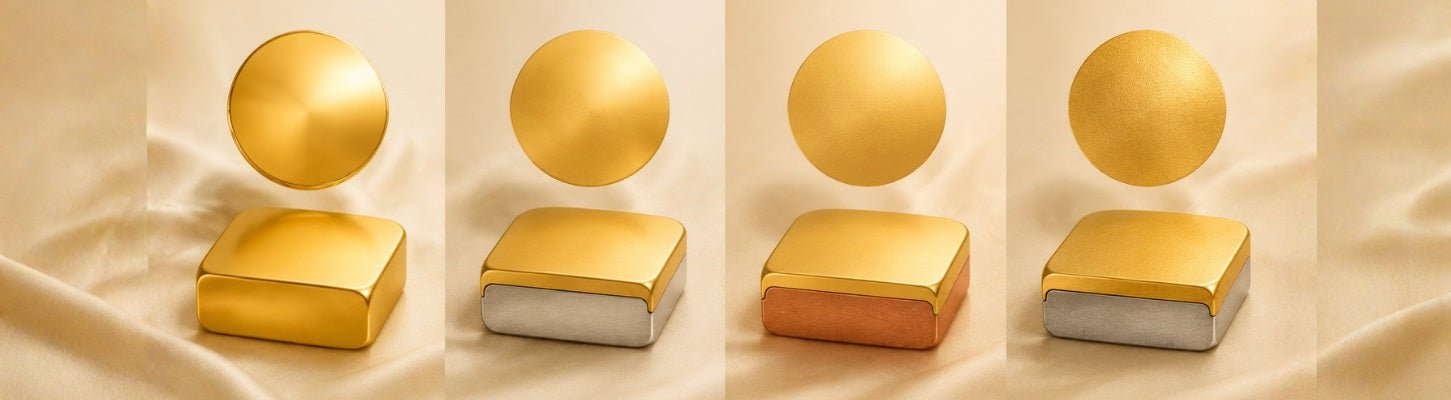
If you have ever shopped for affordable jewelry or sourced components for a handmade piece, you have probably wrestled with the question of gold-filled vs gold-plated, along with two other terms that get used interchangeably online: solid gold and gold vermeil. The four labels look almost identical on the packaging, but the metal underneath, the layer of gold on top, and the price tag are very different. This guide breaks down what each one means, how to tell them apart, and which finish makes sense for the jewelry you are buying or making.
Explore Our Categories



Table of contents
Quick Comparison: Solid Gold, Gold Filled, Gold Plated, and Gold Vermeil at a Glance
Here is a side-by-side snapshot of the four most common gold options in jewelry today.

|
Type |
Composition |
Gold Layer |
Base Metal |
Typical Lifespan |
Price Tier |
|
Solid Gold |
10K to 24K alloy throughout |
Pure throughout |
None |
Lifetime+ |
$ |
|
Gold Filled |
Mechanically bonded gold over base |
Min 5% by weight (1/20) |
Brass or jeweler's bronze |
10 to 30+ years |
$$$ |
|
Gold Vermeil |
Electroplated gold over silver |
2.5+ microns |
Sterling silver (.925) |
2 to 5 years |
$$ |
|
Gold Plated |
Thin electroplated gold |
Typically under 0.5 microns |
Brass, copper, or other base metals |
6 months to 2 years |
$ |
Each has a legitimate use, and none is "fake gold." The differences come down to how much gold is present, how it is bonded to the base, and how long the finish lasts.
What Is Solid Gold?
Solid gold means the piece is a gold alloy all the way through, with no base metal core. Pure gold is too soft for daily wear, so it is mixed with other metals for strength, with the karat (10K, 14K, 18K, 24K) indicating the percentage of pure gold in the alloy. Solid gold holds resale value and lasts for generations, which is why it is reserved for engagement rings, wedding bands, and heirloom pieces commissioned through fine jewelers rather than built from findings.
Solid gold maintains the same gold alloy composition from surface to core, whereas gold-filled jewelry combines a durable outer gold layer with a bonded base metal center.
What Is Gold Filled Jewelry?
In gold-filled jewelry, a durable layer of real karat gold is mechanically fused to a base metal such as brass, and the gold portion must account for at least 5% of the piece's overall weight.
Gold-filled is real gold; the outer surface is solid karat gold, just like a solid gold piece, but the interior is a less expensive base metal.
Because the gold layer is roughly 100 times thicker than typical electroplating, gold-filled jewelry can last 10 to 30 years or more with normal wear, resists tarnish, and rarely causes skin reactions. It is a popular choice for chains, ear wires, and wire-wrapping components. For makers whose designs call for a similar visible look at a more accessible price, gold-plated and vermeil findings are the standard alternatives.
What Is Gold-Plated Jewelry? (What Is Plated Gold?)
Gold-plated jewelry features a lightweight coating of gold applied over another metal through an electroplating process.
Electroplating uses an electrical current in a chemical bath to deposit gold ions onto the surface. The base metal is typically copper, brass, or another alloy, and the gold layer can range from a fraction of a micron up to roughly half a micron for heavier plating.
Jewelry marked with GP, GE, GEP, or HGE typically indicates a gold-plated or gold electroplated finish. The 14k gold-plated meaning is straightforward: the karat refers to the purity of the gold used in the plating bath, not the thickness or amount of gold on the piece. The term "18K gold plated" simply refers to the purity of the gold coating used during plating. Both indicate the karat of the plating itself; they do not mean the piece contains 14K or 18K gold throughout.
The durability of plated jewelry varies based on coating thickness, wear frequency, and the type of piece. A flash-plated piece worn daily on a high-friction area like a ring band might show wear within weeks, while a heavier plated chain or pair of earrings can look great for one to two years with reasonable care.
Gold-plated jewelry is the most accessible price tier in the gold family, which is why it dominates fashion jewelry and trend-driven design. It is also the format most jewelry-making findings come in. Atlanta Findings stocks 22kt and 14kt gold-plated copper components used across handmade necklaces, bracelets, and earrings, including the 22x13mm 22kt Gold Plated Copper Brushed Pear Beads, the 10mm 22kt Gold Plated Oval Box Clasp with Filigree Floral Design, and the 14kt Gold Plated Copper Pear Beads.
What Is Gold Vermeil? (Gold Vermeil Meaning and Standards)
Gold vermeil (pronounced "vehr-may") is a specific type of plated jewelry that meets stricter standards than regular gold plating. Per the FTC Jewelry Guides, three conditions must be met for a piece to be sold as vermeil in the US:
To qualify as vermeil, the core metal must be genuine sterling silver with a minimum purity of .925.
To be classified as gold vermeil, the jewelry must feature a gold surface made with a minimum purity of 10K.
Authentic vermeil jewelry must have a gold layer measuring no less than 2.5 microns in thickness.
What sets gold vermeil apart is its sterling silver foundation beneath the gold layer. Because vermeil sits on silver rather than brass or nickel-containing alloys, it is generally considered hypoallergenic and is a safer pick for sensitive skin. The thicker gold layer also means vermeil lasts longer than regular plating, typically two to five years with reasonable care.
Vermeil is a sweet spot for designers who want the look of gold, the skin-friendly base of sterling silver, and a price point well below solid gold or gold-filled. It is commonly used in earwires, box clasps, hook clasps, and faceted bead components. Examples in the Atlanta Findings catalog include the 16mm Vermeil Earwire Set, the 12mm Vermeil Box Clasp with Sunflower Design, and the 3mm Vermeil Faceted Nugget Beads.
Gold Filled vs Gold Plated: The Difference Between Gold Filled and Gold Plated
This is where most jewelry shoppers get stuck, so let's compare gold-filled vs gold-plated head-to-head across the factors that matter.
|
Factor |
Gold Filled |
Gold Plated |
|
Gold thickness |
At least 5% by weight (~100x thicker) |
Approximately 0.175 to 0.5 microns (lighter "gold flashed" pieces can be thinner; heavier plating can exceed this) |
|
Bonding method |
Mechanical (heat and pressure) |
Electroplating |
|
Lifespan |
10 to 30+ years |
6 months to 2 years |
|
Tarnish resistance |
Excellent |
Poor to moderate |
|
Cost (relative) |
3 to 5 times more than plated |
Most affordable |
|
Allergy potential |
Low |
Higher if the base contains nickel |
The difference between gold-filled and gold-plated really comes down to how much gold is on the piece and how that gold is attached to the base. With gold-plated, a thin film is bonded electrically; over time, friction wears it down until the base metal shows through. With gold-filled, a much thicker gold layer is mechanically fused to the core, so the wearable surface behaves much more like solid karat gold.
When you weigh gold-plated vs. gold-filled for a piece you intend to wear every day for years, gold-filled almost always wins on durability. When you are matching a finish to a fashion piece you plan to rotate seasonally, gold-plated delivers the same look at a much lower price.
Many components used in handmade jewelry, including jump rings, headpins, earwires, charms, and box clasps, are widely available in gold-plated finishes such as 22kt or 14kt gold-plated over copper. Gold-filled versions cost considerably more, which influences which finish ends up in any given piece.
Gold Filled vs Solid Gold: Are They the Same?
No. Gold-filled and solid gold are not the same, even though their visible surface can look almost identical. Solid gold is a karat gold alloy throughout the entire piece. Gold-filled has a base metal interior with a thick gold exterior bonded to it.
The practical difference is significant. A solid 14K gold ring contains roughly 20 times more gold by weight than a 14K gold-filled ring of the same size. That gap shows up in three places: the price, the resale and melt value (gold-filled has very little, solid gold holds value), and the longevity (both last decades, but solid gold can be passed down and reworked indefinitely).
When evaluating gold-filled vs. solid gold for a custom design, the choice usually comes down to budget, intended use, and whether resale value matters to the buyer. Solid gold is the right pick for engagement rings, anniversary pieces, and heirloom items. Gold-filled is the right pick when you want a real karat gold surface on an everyday piece without the price tag of solid gold.
Gold Vermeil vs Gold Filled vs Gold Plated: Side-by-Side
Many shoppers compare all three plated and bonded options before buying. Here is how they line up on the factors that matter most.
|
Feature |
Gold Plated |
Gold Vermeil |
Gold Filled |
|
Base metal |
Brass, copper, or other alloys |
Sterling silver only |
Brass or jeweler's bronze |
|
Minimum gold layer |
None mandated by the FTC |
2.5 microns |
5% of total weight |
|
Minimum karat |
None mandated |
10K |
10K |
|
Lifespan |
6 months to 2 years |
2 to 5 years |
10 to 30+ years |
|
Hypoallergenic |
Often no |
Yes (silver base) |
Usually yes |
|
Tarnish resistance |
Poor |
Moderate |
Excellent |
Gold-filled outperforms vermeil in durability, but vermeil's sterling silver base makes it a better choice for sensitive skin in fashion-forward designs. Anyone comparing gold-plated vs gold-filled will quickly notice that gold-filled offers far more gold for the price, while gold-plated keeps fashion jewelry accessible. Vermeil sits comfortably between the two on both cost and longevity.
How to Identify Plated and Vermeil Jewelry
Quality jewelry usually carries a hallmark indicating the finish. The most common stamps you will see on plated and vermeil findings include:
-
Gold plated: GP, GEP, GE, HGE, EP.
-
Gold vermeil: 925 paired with a vermeil mark; some pieces are stamped "GV" or "Vermeil"
-
Sterling silver: 925, .925, or "Sterling"
Real gold and gold-plated surfaces are not magnetic, so a magnet test is a quick way to verify the underlying metal. Look for color changes along high-friction edges of older pieces; a hint of a different color underneath usually signals that the plating has worn through. Every product listing on Atlanta Findings Company specifies the exact metal and finish, so you always know what you are buying before it ships
How to Care for Plated, Vermeil, and Sterling Silver Jewelry
Each finish needs a slightly different approach.
-
Sterling silver jewelry should be cleaned using a polishing cloth and stored in anti-tarnish storage to maintain its shine.
-
Gold vermeil: To extend the life of gold vermeil jewelry, keep it away from water, perfumes, lotions, and other moisture-heavy products. Store in an anti-tarnish pouch.
-
Gold-plated: The most delicate finish. Wipe gently with a soft dry cloth. Avoid jewelry cleaners, ultrasonic cleaners, and chemicals like chlorine, perfume, hairspray, and lotion. Always remove before swimming or hand-washing.
A universal rule: store jewelry separately, away from humidity, and follow the "last on, first off" routine when getting ready.
Which Gold Finish Should You Choose for Your Jewelry Project?
For jewelry makers and small brands sourcing components, the right finish depends on the type of piece, your customer's expectations, and your price point.
-
Engagement and bridal heirlooms: solid gold (10K to 18K) is the only category that holds resale value and lasts a lifetime, typically commissioned through fine jewelers rather than built from findings.
-
Fashion jewelry and trend designs: gold-plated findings, including 22kt and 14kt gold-plated over copper, deliver the look at an accessible price and are the workhorse of handmade jewelry production.
-
Hypoallergenic skin-contact components: vermeil and other gold-over-sterling-silver finishes (including rose gold over .925 silver and black gold over .925 silver, available on the 18mm Shepard's Hook with Ball Ear Wire) are strong choices because the gold or alloy layer sits on a sterling silver base, making them kinder to sensitive skin than typical plated findings.
-
Statement and costume pieces: gold-plated findings are well-suited because the design lifecycle generally matches the finish lifespan.
-
Mixed-metal and oxidized aesthetics: antiqued gold-plated charms, oxidized sterling silver clasps, and antiqued silver-plated finishes add depth to layered designs.
If you are sourcing components for your next project, Atlanta Findings Company offers gold-plated, vermeil, sterling silver, silver-plated, copper, and brass findings, including box clasps, toggles, lobster clasps, hook clasps, earwires, headpins, charms and connectors, buttons, and a full range of beads, with wholesale pricing tiers for makers and small brands.
Final Thoughts
The four most common gold jewelry types each have a place. Solid gold is for the pieces you keep forever. Gold-filled offers a real karat gold surface at a lower price, well-suited to daily-wear designs that need to last. Gold vermeil delivers a hypoallergenic, mid-range option built on a sterling silver base. Gold-plated keeps fashion and trend jewelry accessible at countless finishes and price points.
If you are a jewelry maker or small brand sourcing components, the right finish depends on your customer, your price point, and your design intent. Atlanta Findings Company stocks gold-plated, vermeil, sterling silver, silver-plated, copper, and brass findings, including clasps, earwires, headpins, charms, buttons, and a wide range of beads, with retail and wholesale options for makers of every scale. Browse the latest arrivals or read more about the Atlanta Findings story to find the components that fit your next design.
Still trying to decide between solid gold, gold-filled, gold vermeil, or gold-plated for your next piece? You don't have to figure it out alone. Give our team a call at +1 888-234-1234 or send a quick note to info@atlantafindingscompany.com. And when you want more guidance on metals, finishes, and design choices, head over to our blog for honest advice and fresh ideas to spark your next creation.
FAQs: Common Questions About Gold Jewelry Types
Is Gold-filled Real Gold?
Yes. The outer layer of a gold-filled piece is solid karat gold (10K minimum), mechanically bonded to a base metal core. It is genuine gold; it just is not gold throughout the piece.
Which is Better, Gold-filled or Gold-plated?
Gold-filled jewelry is often preferred for long-term wear because it offers better durability and value retention than plated options. Gold-plated is the better choice for affordable trend or fashion pieces.
Is Gold-filled the Same as Solid Gold?
No, solid gold contains gold throughout the entire piece, while gold-filled jewelry only has a thick outer gold layer. Gold-filled has a base metal interior and a thick gold exterior bonded to it. The visible surface looks identical, but the gold content and resale value are much lower for gold-filled.
Does Gold Vermeil Tarnish?
Under normal conditions, the gold exterior on vermeil jewelry resists tarnishing unless the layer becomes worn. If the gold layer wears through, the underlying sterling silver can be exposed and tarnish. With proper care, vermeil holds up well for years.
What Does 14k Gold-plated Mean?
The gold used in the plating bath was 14K (about 58.3% pure), not that the piece contains 14K gold throughout. The plating itself is still very thin, regardless of the karat stamped.
Can Gold-plated Jewelry Be Replated?
Yes. A jeweler can re-electroplate worn pieces. The cost may exceed the value of inexpensive items, so replating tends to be more practical for sentimental or intricately designed pieces.
What is the Most Affordable Type of Real Gold Jewelry?
Among real gold jewelry categories, gold-plated pieces are usually the least expensive choice. Gold-filled offers a strong balance of real karat gold surface and longevity at a more accessible price than solid gold, while vermeil sits in the middle with a sterling silver base.


