



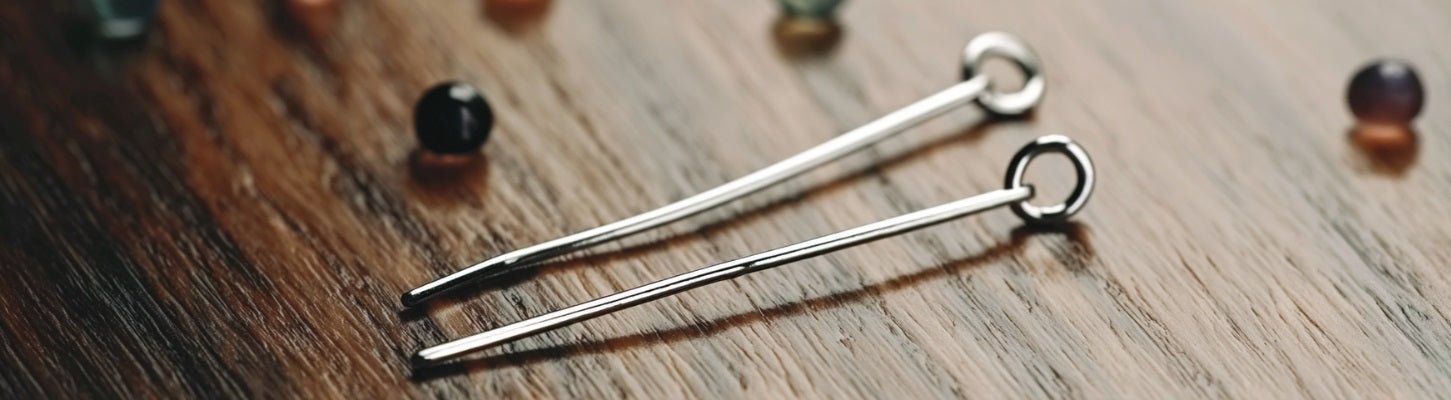
If you have ever admired a beaded earring or charm bracelet and wondered what headpins are used for in jewelry making, this guide covers every answer you need, from the basics to pro-level techniques.
Headpins are one of the most versatile findings in any jewelry maker's kit. They hold beads in place, turn loose components into finished dangles, and give your creations the polished look of professionally made pieces. Whether you are a beginner crafting your first pair of earrings or a seasoned artisan refining a signature collection, knowing how headpins work will unlock a world of design possibilities. This guide walks through what they are, how to choose the right type, how to form clean loops, and the project ideas that will put your findings to work.
Explore Our Categories



Table of contents
What Is a Headpin?
A headpin is a thin, straight piece of wire with a decorative or flat "head" on one end that acts as a stopper. When you slide a bead onto the wire, the head keeps the bead from slipping off. The opposite end is usually flush-cut, providing a clean surface for bending and looping.
Headpins are a staple jewelry finding, and Atlanta Findings Company stocks them in multiple metals and finishes to match the scale and tone of your design. The headpin collection includes sterling silver, 22kt gold-plated copper, vermeil, brass, and copper options, giving makers a finish for every style from fine jewelry to warm, earthy handmade pieces.
What Are Head Pins Used For? Key Applications
Head pins are the backbone of any bead-based design. They let you turn a single bead or a stack of beads into a ready-to-attach component. Here are the most common applications you will encounter in everyday jewelry making:
Earring dangles: Thread a bead, form a loop, and attach it to an ear wire. Pair your headpin dangles with earwires from Atlanta Findings Company for a complete, professional-looking earring.
Charm bracelets: Create bead charms and link them to a chain for a custom piece that tells a story. Mix in pieces from the charms and connectors collection for added personality.
Pendants and necklaces: Add a single focal bead or a cluster of bead drops on a chain.
Rosaries and prayer beads: Headpins form the repeating bead links and terminal drops in rosary-style designs.
Decorative dangle accents: Attach beaded headpin drops to box clasps, toggles, or connectors to add movement and sparkle to finished pieces.
In short, any time you want a bead to dangle, connect, or stay anchored to a wire, a headpin is the finding that gets the job done.
Types of Headpins Every Maker Should Know
Not all headpins look alike, and choosing the right style can elevate your piece:
Flat (nail-head) headpins: The classic style with a tiny flat disc at the tip. Ideal for general use and beginners.
Ball-end headpins: Feature a small, rounded ball at the end for a slightly decorative and sturdy finish.
Decorative (fancy) headpins: Include ornate finials, filigree tips, or stone-set heads for a finished look without extra embellishment.
Paddle headpins: Hammered flat into a paddle shape at the tip, adding visual interest.
Atlanta Findings Company curates its headpin selection to suit both professional designers and hobbyists, so you can match the style of pin to the vibe of your finished piece.
Choosing the Right Headpin: Gauge, Length, and Metal
Picking the right headpin comes down to three factors: bead size, project type, and finish.
Wire gauge. The gauge must fit through your bead hole with minimal wobble. Common guidelines are 24 or 22 gauge for fine pearls and small beads, 20 gauge for standard 4 to 6 mm beads, and 18 or 16 gauge for larger 8 to 10 mm or chunky beads. A snug fit keeps the bead centered and prevents rattling.
Length. Shorter pins (1 to 1.5 inches) suit simple open loops on small drops. Longer pins (2 inches or more) are needed for wire-wrapped loops or stacks of multiple beads, since wrapping consumes extra wire.
Metal and finish. Match the metal of your headpin to the rest of your findings. Sterling silver pairs with silver chains and clasps, 22kt gold-plated copper and vermeil bring a luxurious gold tone, and brass or copper headpins give warm, earthy character to boho and artisan designs. Browse the full headpin collection at Atlanta Findings Company to see every finish in stock.
How to Use Head Pins: A Simple Step-by-Step Tutorial
Learning to work with headpins is one of the first milestones for any beginner. Here is the beginner-friendly method for creating a simple open loop:
Thread your bead. Slide your bead or beads onto the headpin so they rest against the head.
Leave room for the loop. Ensure about 3/8 inch (roughly 1 cm) of wire extends above the bead. Trim extra length if needed.
Bend at a right angle. Bend the exposed wire at a 90-degree angle just above the top bead.
Form the loop. Grip the tip of the wire and rotate it into a neat circle, rolling the wire toward the bend.
Close and finish. Adjust the loop so it aligns directly over the bead, then attach it to your ear wire, chain, or connector before fully closing.
Pro Tip: For matched pairs such as earrings, keep the loop size consistent by gripping the wire at the same exact spot every time. This gives you identical drops across every piece in a set.
Wire-Wrapped Loops vs. Open Loops: Which One to Use
Once you master the basic loop, consider which finish suits your project.
Open loops are faster to make and work well for lightweight designs such as drop earrings and short chokers. They can pull open under stress, so avoid them for heavy charms or daily-wear bracelets.
Wire-wrapped loops (sometimes called "pigtails") are closed, reinforced loops where you wrap the tail of the wire around itself two or three times before trimming. They are stronger and ideal for bracelets, heavy pendants, and any piece worn daily.
For high-movement jewelry, always choose wire-wrapped loops and start with a longer headpin to give yourself enough wire to wrap. For delicate earrings or quick production runs, a clean open loop works beautifully.
Common Headpin Mistakes to Avoid
Even experienced makers slip up. Watch out for these pitfalls:
Using a gauge too thin for the bead weight, which leads to bent or kinked pins.
Cutting the wire too short before forming the loop leaves no room to shape it.
Leaving gaps in open loops that let connectors slip out over time.
Mismatching metals can make a finished piece look unintentional. Keep sterling with sterling, and gold-plated or vermeil with other warm tones.
Forgetting to attach the loop to its destination before closing, forcing a redo.
Headpin Project Ideas to Spark Your Creativity
Ready to put your findings to work? Try these ideas using products from Atlanta Findings Company:
Birthstone-inspired earrings using beaded headpins paired with sterling silver earwires.
A cluster pendant featuring three or five bead drops of varying lengths hanging from a link chain.
A charm bracelet with beaded headpin dangles and pieces from the charms and connectors collection.
Rosary-style strands with uniformly spaced bead links finished with a headpin terminal drop.
A statement necklace with vermeil or gold-plated copper headpin dangles, accenting a box clasp.
Why Source Your Headpins from Atlanta Findings Company
Quality findings can make or break the final piece. Atlanta Findings Company offers a curated selection of sterling silver, 22kt gold-plated copper, vermeil, brass, and copper headpins in a range of gauges and lengths. Every piece is selected for consistent finish, reliable construction, and a look that professional jewelers can trust. Wholesale purchasing is also available for designers who need bulk quantities. Whether you are crafting a single custom piece or producing a full collection, you can count on trusted quality every time.
Final Thoughts
So, what role do headpins really play in a finished piece? They are the small but mighty workhorses that turn individual beads into wearable art. From simple drop earrings to charm bracelets, the right headpin used the right way transforms both your process and your final product. Explore the full headpin collection at Atlanta Findings Company to find the perfect match for your next design, and start turning your bead stash into finished pieces today.
If you're curious about What Are Headpins Used for in Jewelry Making, don't hesitate to contact us! Call +1 888-234-1234 or send us an email at info@atlantabeadcompany.com. Visit our blog for more jewelry-making tips and advice!
FAQs: Headpins in Jewelry Making
What is the Difference Between a Headpin and Similar Findings?
A headpin has a flat or decorative stopper at one end to hold beads in place. It is different from a clasp (which closes a bracelet or necklace) and from a charm (which is a decorative pendant). Headpins are the connection point that turns a loose bead into a wearable drop.
How Long Should My Headpins Be?
Match the length to your technique. Plan on at least 1 inch for simple open loops and 2 inches or more for wire-wrapped loops, depending on the size of your bead stack.
What Metals Does Atlanta Findings Company Offer for Headpins?
The headpin collection is available in sterling silver, 22kt gold-plated copper, vermeil, brass, and copper, so you can match any design aesthetic and price point.
Can I Buy Headpins in Bulk?
Yes. Atlanta Findings Company offers wholesale purchasing options for jewelry designers and retailers. Visit the wholesale page or contact the team directly to learn more.
Are Plated Headpins Durable for Finished Pieces Sold in Stores?
Plated and 22kt gold-plated copper headpins are well-suited for fashion jewelry, handmade lines, and everyday wear pieces. For heirloom-quality or premium price-point designs, sterling silver or vermeil are the best choices.


