



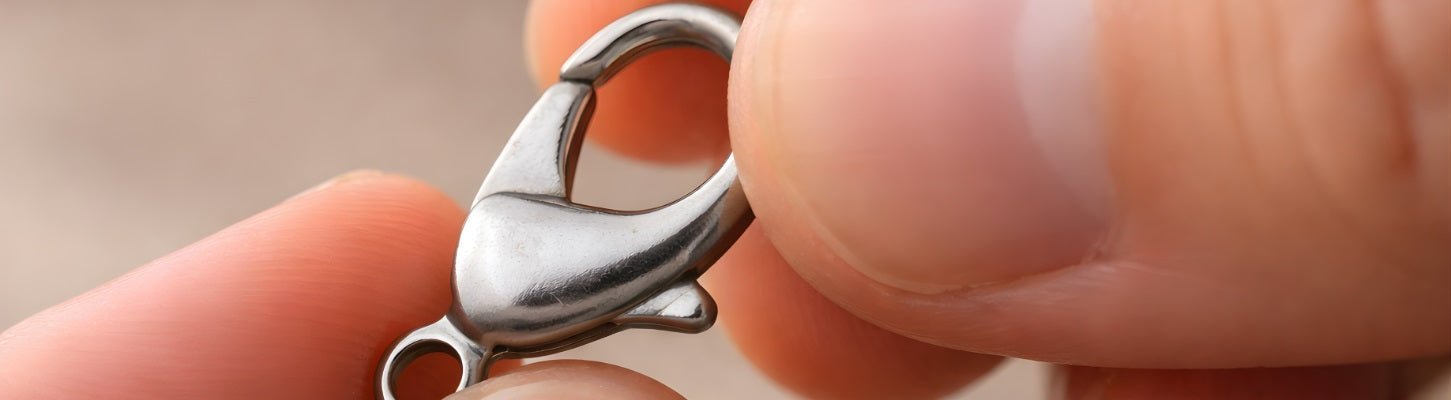
Wondering how to use a lobster clasp correctly, you're in the right place. Whether you are finishing a handcrafted bracelet, assembling a layered necklace, or making quick jewelry repairs, the lobster clasp is one of the most reliable and widely used closures in jewelry making. Known for its strong spring mechanism and secure latch, it works beautifully with beading wire, chain, and cord.
This guide covers everything you need: understanding the parts of a lobster clasp, choosing the right size, selecting the best attachment method for your project, and learning how to open and close it with ease. No confusing jargon, just clear, practical steps, whether this is your first piece or your hundredth.
Explore Our Categories


Table of contents
What Is a Lobster Clasp?
A lobster clasp, sometimes referred to as a lobster claw clasp, is equipped with a spring-loaded design that mimics the shape of a lobster's claw. Pressing a small lever opens a hinged gate, which closes automatically when released, locking onto a jump ring or chain link. This self-closing mechanism makes it far more secure than a simple hook clasp, and easier to use single-handed compared to a barrel clasp.
Lobster clasps come in several styles. This quick reference will help you pick the right type before you begin:
|
Clasp Type |
Best For |
Security Level |
|
Standard Lobster Clasp |
Necklaces, bracelets |
High |
|
Swivel Lobster Clasp |
Keychains, charms |
Very High |
|
Trigger Lobster Clasp |
Heavy pendants, chunky chains |
High |
|
Round Lobster Clasp |
Delicate necklaces |
Medium-High |
Pro Tip: For most necklaces and bracelets, a standard lobster clasp in 10mm to 14mm is the ideal balance of visibility, ease of use, and security. Heavier pendants or keychains call for a swivel or trigger-style clasp.
Tools and Materials You Will Need
Gather these before you start. Having all your tools readily available helps streamline your process and keeps your workspace organized.
|
Item |
Purpose |
Required? |
|
Lobster clasp |
Main closure mechanism |
Yes |
|
Jump ring (6-8mm) |
Connects the clasp to the chain/end piece |
Yes |
|
Crimp beads/tubes |
Secures the beading wire to the clasp loop |
For wire stringing |
|
Beading wire (tiger tail) |
Flexible stringing foundation |
For wire stringing |
|
Crimp pliers |
Folds and seals crimp beads professionally |
Recommended |
|
Chain-nose pliers (x2) |
Opens and closes jump rings safely |
Yes |
|
Wire cutters (side cutters) |
Trims excess wire cleanly |
Yes |
|
Bead tips/knot covers |
Hides knots on cord ends |
For cord stringing |
|
Extension chain (optional) |
Adds length adjustment |
Optional |
Note: Crimp pliers give a more professional finish than flat-nose pliers when securing crimp beads. If you do a lot of wire stringing, they are worth the investment.
How to Use a Lobster Clasp: Step-by-Step
The process breaks down into two parts: attaching the clasp to your jewelry strand, and learning to open and close it for daily wear.
Step 1 — Attach a Jump Ring to Your Clasp (If Not Pre-Attached)
Most lobster clasps arrive with an open attachment loop at their base. This loop connects to a jump ring, which then links to your chain, wire loop, or cord end piece.
- Hold the jump ring securely on both sides of the seam using two pairs of chain-nose pliers.
- Twist one side toward you and the other away to open the ring sideways — never pull it apart flat, as that distorts the shape.
- Place the open jump ring through the lobster clasp's attachment loop to link them together.
- Slide the jump ring through the end link of your chain or the loop on your bead tip/wire end piece.
- Close the jump ring by twisting it back into its original position. Ensure the two ends meet flush with no gap.
Step 2 — Attach a Lobster Clasp to Beading Wire (Crimp Bead Method)
This is the most common method for bracelets and necklaces strung on beading wire (tiger tail).
- Cut your beading wire to your desired length, leaving an extra 2 to 3 inches on each end for finishing.
- Slide one crimp bead onto the wire, followed by the jump ring or the attachment loop of the lobster clasp.
- Reinsert the wire tail through the crimp bead, forming a tight loop around the clasp to secure it in place. Pull tight, ensuring the clasp is closed but still pivots.
- Place the crimp bead in the second (U-shaped) notch of your crimp pliers and squeeze to fold it.
- Place the crimp bead into the round notch and squeeze it again to form a smooth tube shape.
- Tug on the clasp firmly to test the crimp. String the first few beads over the doubled wire tail to hide it, then trim any excess with wire cutters.
- Finish the opposite end of the piece by attaching a jump ring using the same crimp method.
How to Attach a Lobster Clasp to a String or Cord
Learning how to attach a lobster clasp to a string requires a slightly different approach than the crimp method used for wire. Silk cord, nylon, and cotton cord do not grip crimp beads reliably, so use bead tips (also called clamshell knot covers) instead.
- Tie two to three secure overhand knots at the end of your cord, stacked tightly together.
- Push the cord through the bead tip's hole from the inside out. The knot cluster should sit inside the cup of the bead tip.
- Use flat-nose pliers to gently secure the bead tip over the knots, ensuring they stay in place.
- Open a jump ring and thread it through the small hook or loop on the bead tip, then add the lobster clasp to the jump ring before closing it.
- Repeat this process on the other end of your cord, attaching a plain jump ring rather than the clasp — this is the ring the clasp will hook onto during wear.
How to Open and Close a Lobster Clasp for Everyday Wear
Once your piece is finished, using it is simple. Push the small thumb lever on the side of the clasp with your fingernail or the pad of your thumb. The gate swings open. Hook the gate over the jump ring on the opposite end of the jewelry. Release the lever, and the gate snaps shut.
For bracelets, which can be tricky to clasp one-handed, try this approach: lay the bracelet across the inside of your wrist, hold the clasp end between your thumb and index finger, and use the fingers of the same hand to hold the chain end steady while you guide the clasp onto the jump ring.
Pro Tips and Troubleshooting
- Clasp spring feels stiff: A very light touch of jeweler's lubricant on the spring mechanism restores smooth operation.
- Jump ring keeps slipping out: Switch to a soldered (fully closed) jump ring on the non-clasp end of the piece. The clasp cannot accidentally open a soldered ring.
- Clasp is too small or large: For delicate chains, use a 10mm clasp. For chunky beaded bracelets or statement necklaces, move up to 14mm to 18mm for comfort and proportion.
- Crimp bead cracked: You squeezed too hard or used the wrong size. Replace with a crimp tube (more durable than a flat crimp bead) and use the two-step crimp plier method described above.
- Wire showing at the end: String two to three seed beads over the doubled wire tail before trimming, so the raw end is fully concealed beneath your bead pattern.
Summary
Knowing how to use a lobster clasp opens up a huge range of jewelry-making possibilities. With the right tools, a quality crimp bead or bead tip, and a properly sized jump ring, you can create finished pieces that look and feel professional, pieces that hold up through daily wear and look polished from every angle.
At Atlanta Findings, we stock lobster clasps in gold plate, rose gold plate, silver plate, and base metal finishes — including copper — from 10mm up to 23mm, to suit every project and price point. Browse our full collection of lobster clasps and findings to stock your studio with everything you need to bring your designs to life.
If you have more questions on how to use a lobster clasp, feel free to call us at +1 888-234-1234 or drop us an email at info@atlantabeadcompany.com. Our experts are ready to assist you. Visit our blog for more information!
Frequently Asked Questions
Can I Use a Lobster Clasp With an Elastic Cord?
An elastic cord is generally tied in a knot rather than finished with a clasp. If you want an adjustable elastic bracelet with a clasp, use a bead tip to secure the elastic ends and attach a lobster clasp via a jump ring, just as you would with standard cord.
What Size Lobster Clasp is Best for a Necklace?
For most necklaces, a 12mm to 14mm lobster clasp strikes the right balance. Anything smaller can be difficult to open, especially with fine motor challenges. Anything larger may look disproportionate on delicate chains.
How Do I Know if My Lobster Clasp is Secure Enough?
After crimping or knotting, tug on the clasp with moderate force. If the loop holds without slipping or the crimp bead shifting, the connection is secure. A properly set crimp bead should not move at all when you tug.
How Do I Open a Lobster Clasp With Long Nails?
Use the pad of your fingertip rather than the nail tip, pressing against the lever from the side. Alternatively, a small jewelry tool or the tip of a closed bobby pin can depress the lever without risking a broken nail.


